




Revolutionary Implant Restores Sight
A groundbreaking eye implant developed at Stanford University is giving some blind adults the ability to read, recognize faces, and even create artwork again. The device, called the PRIMA retinal implant system, targets age-related macular degeneration (AMD), a leading cause of blindness in older adults that affects roughly 1 million people in the United States. Invented by Stanford ophthalmologist and electrical engineer Daniel Palanker, the implant offers new hope for those who have lost central vision.
The PRIMA system represents a significant leap forward in retinal prosthetics. Unlike earlier devices that required external wires or batteries, this implant uses light for both power and activation, a key innovation by Palanker, who previously developed lasers for cataract surgery. The technology is now being commercialized by Science Corp., an Alameda-based company, and is also being adapted for other forms of blindness, including Stargardt disease.
How the Implant Works
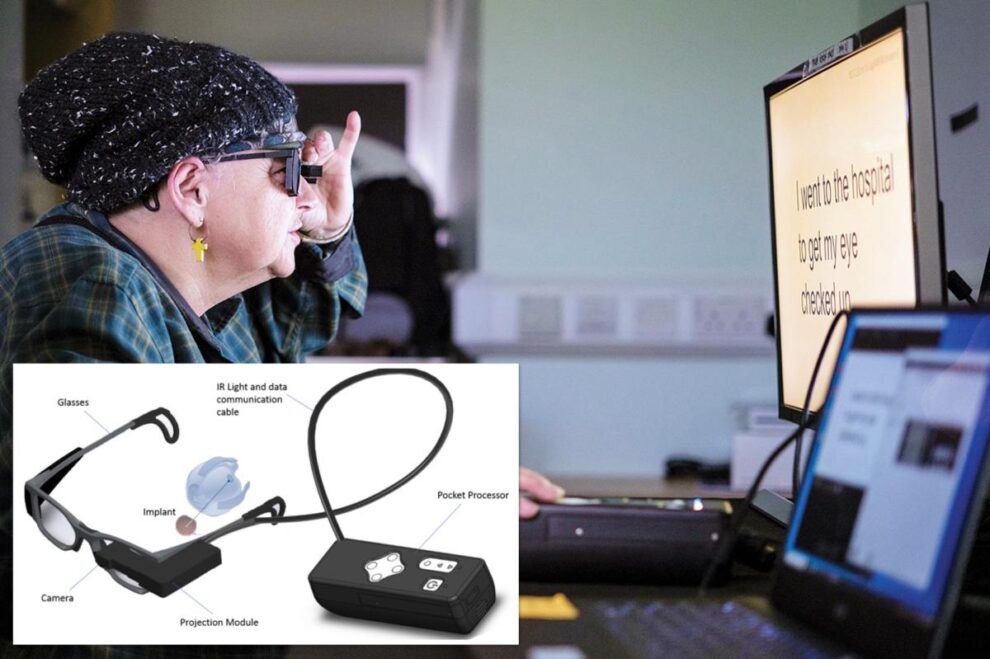
The implant itself is a tiny 2-by-2-millimeter disc containing 370 photosensitive pixels. It is surgically placed just behind the retina, where it sits without penetrating the eye. Once implanted, patients must wear special augmented-reality glasses equipped with a camera that captures images and projects them as near-infrared light onto the implant. The solar-powered pixels convert that light into electrical signals that stimulate surviving retinal cells, which then send information to the brain.
This process effectively bypasses damaged photoreceptor cells in the macula, the part of the retina responsible for sharp central vision. The glasses and implant work together to create a visual signal that the brain can interpret, allowing patients to perceive images. Over time, with training, the brain learns to interpret these signals as meaningful vision.
Clinical Trial Results Show Promise
In a clinical trial, 26 out of 32 patients showed significant vision gains after one year, according to results published in the New England Journal of Medicine. On average, their vision improved by five lines on a standard eye chart. Many who could previously only see the top line on the chart are now able to read large print and perform daily tasks. One participant’s vision improved by 12 lines, a remarkable gain that allowed them to recognize faces and read text.
The trial involved patients with advanced AMD who had lost central vision. After months of training with the glasses and implant, participants demonstrated measurable improvements in visual acuity. The results suggest that the PRIMA system can restore functional vision for daily activities, though individual outcomes vary. As with any medical treatment, patients should consult a healthcare professional to determine if the implant is suitable for their condition.
Regulatory Path and Future Outlook
Science Corp., the company commercializing the technology, hopes to receive European regulatory approval this summer. Approval from the US Food and Drug Administration (FDA) is further down the road, but the company is pursuing a humanitarian device exemption to speed the process. This exemption is designed for devices that treat rare diseases and can accelerate access for patients in need.
The PRIMA implant is currently being adapted for other forms of blindness, including Stargardt disease, a genetic condition that affects young people. Researchers are also exploring its use for other retinal degenerative diseases. The device’s wireless design and solar-powered operation make it less invasive than previous implants, reducing the risk of infection and simplifying the surgical procedure.
As the technology advances, it could offer a new option for millions of people worldwide who suffer from vision loss due to retinal diseases. For now, the results from the Stanford trial provide a glimpse of what may be possible, offering hope to those who have lost sight.
Frequently Asked Questions
How does Stanford’s PRIMA retinal implant help blind patients see again?
The PRIMA implant, a 2-by-2-millimeter disc with 370 photosensitive pixels, is placed behind the retina. Patients wear augmented-reality glasses that capture images and project near-infrared light onto the implant, which converts it into electrical signals to stimulate surviving retinal cells.
What were the clinical trial results for the PRIMA eye implant?
In a clinical trial, 26 out of 32 patients showed significant vision gains after one year, with an average improvement of five lines on a standard eye chart. One participant’s vision improved by 12 lines, allowing many to read large print and perform daily tasks.
When is the PRIMA retinal implant expected to receive regulatory approval?
Science Corp. hopes to receive European regulatory approval in summer 2025. US FDA approval is further off, but the company is pursuing a humanitarian device exemption to speed the process.