




For decades, Boston has worn the crown of the world’s biotech capital, a title supported by an unmatched concentration of research universities, teaching hospitals, and venture capital. Yet, beneath the surface, the tectonic plates of the industry are shifting.
Founders who cut their teeth in Massachusetts institutions are departing for California, raising a pressing question: is the biotech capital moving? While the full picture is still emerging, a convergence of individual stories, technological disruption, and regulatory milestones suggests that the geography of innovation may never look the same again.
Boston’s Crown Under Pressure
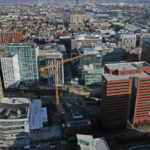
Boston claims it is the biotech capital of the world, and for good reason—the region has birthed countless therapies and companies. However, that identity is under pressure.
The Pull of the West Coast
Some founders generated in Boston have decided to leave, and reports indicate a discernible trend: founders decamp from Boston for California. This isn’t a mere trickle; it’s a signal that the gravitational pull of West Coast capital and culture is becoming harder to resist. The implications for the local ecosystem could be profound if the exodus continues.
The California Draw: A Founder’s Personal Calculus
Felix Wong exemplifies this migration. A native of Massachusetts, he grew up steeped in the state’s academic excellence, earning degrees from Harvard and training at MIT. These institutions are the very pillars of Boston’s biotech supremacy.
Silicon Valley’s Risk-Tolerant Investors
Yet, after immersing himself in the local scene, Wong concluded that Silicon Valley offered something his home state could not: investors willing to bet on ambitious young people before they had gray hair. This perception of a more risk-tolerant and visionary financial community became the linchpin of his decision to leave.
AI, Anxiety, and the New Biotech Culture
Today, Wong leads Integrated Biosciences, a firm that embodies a broader anxiety hanging over Massachusetts as AI reshapes biotech. The rise of artificial intelligence in drug development is altering the innovation landscape, potentially reducing the moat that physical proximity to wet labs once provided.
Creativity Unleashed by a New Environment
This anxiety is palpable among traditional hubs, which fear being bypassed by more agile, computation-first startups. Wong’s own reflection captures the cultural shift: “There’s some crazy experiments that we’re currently running … that I probably would not have thought about when I was in Boston.” That creative liberty, he suggests, is a product of his new environment—one that encourages daring over orthodoxy.
Regulatory Milestones Amid the Migration
Even as the founder pipeline tilts westward, biotech’s product engine continues to deliver results that transcend geography. Replimune secured an FDA approval, marking a significant therapeutic advance.
Debating the Evidence
The path was not without its obstacles: former FDA oncology chief Richard Pazdur had concerns during the approval bid last year, highlighting the challenging nature of the evidence package. Ultimately, the agency’s advisers concluded that the treatment’s apparent benefits for patients who have exhausted PD-1 inhibitors outweighed any flaws in the single-arm trial.
Strong Commercial Prospects
Adding a commercial lens, Leerink analyst Daina Graybosch wrote last week: “We expect strong demand for the regimen given its relative ease of access and benign safety profile.” Such endorsements suggest that, regardless of where capital is flowing, clinical progress remains robust.
Financial Firepower and Scientific Curiosity
IPO Funds Cardiac Therapy
Braveheart raised $382.5 million in an IPO to fund a cardio drug from Hengrui, a deal that underscores the deep pools of capital available for innovative therapies.
Uncovering Tau’s Secrets in Alzheimer’s
Meanwhile, on the scientific frontier, Alzheimer’s researchers uncover more secrets of tau function, chipping away at one of the most devastating diseases. These efforts are not tied to a single address—they span laboratories and clinics across the nation, illustrating that while the capital may be contested, the mission to cure disease is boundless.
FDA Pilots Expedited IND Process
In a parallel move, the FDA outlined expedited IND pilot plans, an initiative seeking to pick up to 10 programs by year-end, aiming to accelerate the translation of discoveries into trials.
A Capital in Transition?
So, is the world’s biotech capital on the move? The evidence paints a picture of a sector in flux. Boston’s cultural and educational foundations remain formidable, but the departure of innovators like Felix Wong—and the anxiety embodied by companies like Integrated Biosciences—exposes vulnerabilities. Silicon Valley’s embrace of unconventional thinkers and AI-driven models offers a competing vision that is luring talent away. In the end, the biotech capital may not relocate to a single city, but rather dissolve into a network of hubs. The crown may not fall, but it’s certainly being dented.