






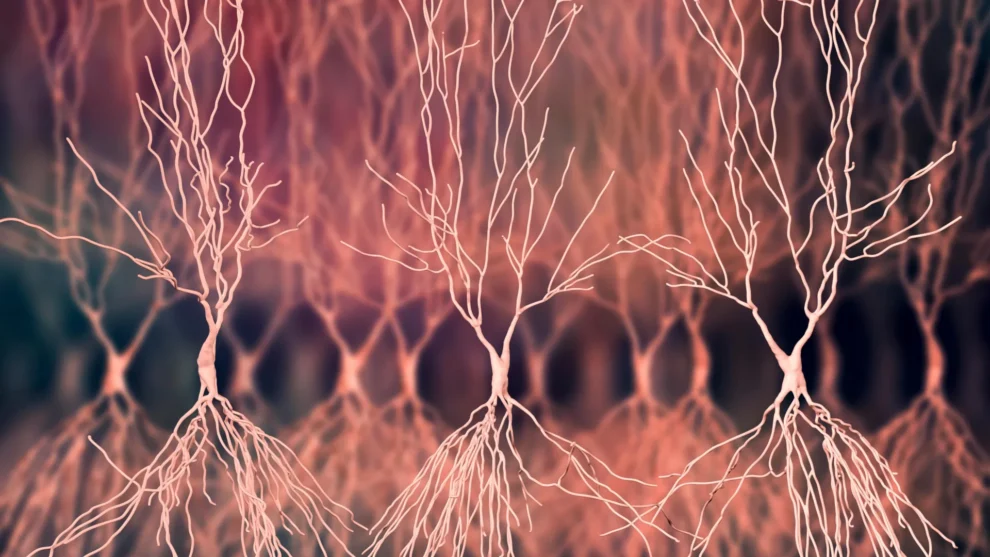
A team at Vanderbilt University’s Warren Center for Neuroscience Drug Discovery has discovered two new chemical compounds that may finally help scientists decipher the role of TAOK proteins in Alzheimer’s disease. The compounds, named VU6083859 and VU6080195, are the first selective inhibitor and a pan-activator of the TAOK family, respectively. Their development, reported in ACS Chemical Neuroscience, offers unprecedented tools to probe this understudied biological pathway, potentially revealing hidden drivers of neurodegeneration.
The Scope of Alzheimer’s Disease
A Growing Health Emergency
Alzheimer’s disease is the leading cause of dementia. In the United States, more than seven million people currently live with the condition. This reality places immense pressure on healthcare systems and families, underscoring the urgent need for better treatments.
Limitations of Current Treatments
While some treatments can slow its progression, they do not stop it. Most available therapies primarily address symptoms rather than the underlying disease process. No therapy can cure Alzheimer’s, leaving patients and families with limited options. Consequently, researchers are intensifying efforts to uncover the molecular roots of the disease.
A Biological Black Box
The Challenge of Uncharted Proteins
A major obstacle to developing better therapies is that researchers still do not fully understand the biology behind Alzheimer’s. This lack of understanding also hampers research into many other neurological diseases and neurodevelopmental disorders. Scientists have identified genes and proteins that may contribute to these conditions, but their exact roles remain murky. Unraveling these connections demands precise methods to manipulate these biological targets.
Why TAOK Remained Understudied
Studying these genes and proteins can be extremely difficult when researchers lack a reliable way to change how those biological targets behave. TAOK proteins have received relatively little attention in in vivo models, partly due to the absence of specific chemical probes. Without such tools, the field has been unable to test whether TAOK dysfunction directly contributes to disease. This knowledge gap left a critical question unanswered: are TAOK proteins hidden drivers of Alzheimer’s? This stalemate has now been broken.
Two Chemical Keys
VU6083859: The First Selective TAOK-1 Inhibitor
The collaboration led to the discovery of VU6083859, the first selective inhibitor of TAOK-1. This compound allows researchers to precisely block the activity of this specific kinase, enabling detailed studies of its role in cellular pathways.
VU6080195: A Pan-Activator of the TAOK Family
In parallel, VU6080195 was found to activate all three proteins in the TAOK family. Together, these two compounds offer a dual approach to modulating TAOK activity—a significant technical achievement in chemical biology.
Bridging the Gap Between Genetics and Function
With these compounds now available, neuroscientists can examine how the TAOK protein family functions and explore its links to Alzheimer’s and other neurological diseases. Specifically, they can study how altering TAOK activity affects brain cells, offering a window into previously hidden disease mechanisms. The compounds effectively bridge a critical gap between genetic suspicion and functional proof.
A Dedicated Research Hub
Inside the Warren Center for Neuroscience Drug Discovery
Most of the work was carried out at the WCNDD under the leadership of Executive Director Craig Lindsley. The WCNDD is a clinical-stage biotech start-up within Vanderbilt, with an active pipeline that includes five compounds in phase I clinical trials. This environment blends academic rigor with industry-like drug development capabilities, setting it apart in the academic landscape.
Leadership and Collaboration
Daniel Schultz, a former postdoctoral fellow in the Warren Center, contributed to the project. The WCNDD is a founding pillar of the Vanderbilt Institute for Therapeutic Advances, which is also led by Craig Lindsley. Under his guidance, the team has pushed the boundaries of what is known about protein kinases in the brain. The paper in ACS Chemical Neuroscience not only shares the compounds’ characteristics but also invites the broader scientific community to utilize them, providing a blueprint for future investigations.
Charting a New Course
From Laboratory Tools to Disease Insights
These compounds represent a leap forward in Alzheimer’s research. For the first time, scientists can directly investigate the TAOK family’s role in neurodegeneration. This could illuminate hidden drivers of the disease and inspire entirely new therapeutic strategies. The ability to both inhibit and activate TAOK proteins offers a complete experimental toolkit.
Important Disclaimer and Future Outlook
However, it is crucial to note that VU6083859 and VU6080195 are laboratory tools, not drugs. Anyone seeking medical advice or considering treatments should consult a healthcare professional. The path from chemical probe to clinical therapy is long, but these discoveries lay a crucial foundation. With continued research, the TAOK family may one day become a target for disease-modifying therapies.
Frequently Asked Questions
What are the two new compounds discovered that could help decipher hidden drivers of Alzheimer’s?
The compounds are VU6083859, the first selective inhibitor of TAOK-1, and VU6080195, which activates all three TAOK family proteins. They were developed at the Vanderbilt University Warren Center for Neuroscience Drug Discovery (WCNDD).
Why are TAOK proteins significant in Alzheimer’s research?
TAOK proteins have received relatively little attention in in vivo models, but they may be linked to Alzheimer’s and other neurological diseases. With these new compounds, neuroscientists can now examine how the TAOK family functions and explore its role in Alzheimer’s.
How many people are affected by Alzheimer’s, and what makes this new research necessary?
Alzheimer’s affects more than seven million people in the United States, and no cure exists. A major obstacle is that researchers do not fully understand the disease’s biology, which these compounds aim to address by providing tools to study TAOK proteins.
Source
- www.sciencedaily.com
- Materials (medschool.vanderbilt.edu)
- Vanderbilt University (www.vanderbilt.edu)
- 10.1021/acschemneuro.5c00906 (dx.doi.org)
- SCITECHDAILY.com (scitechdaily.com)
- AI Helps Crack an 87-Year-Old Math Conjecture With One Tiny Formula (scitechdaily.com)