






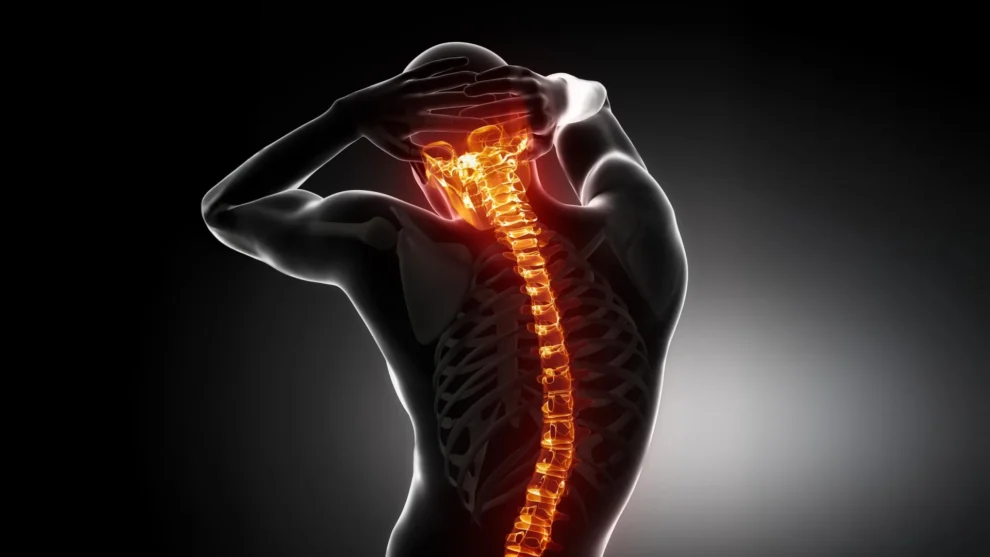
The Silent Epidemic of Back Pain
Most people experience back pain at some point, and a major cause is intervertebral disc degeneration (IVDD) – the progressive deterioration of spinal discs. Além disso, IVDD is widespread and burdens patients and healthcare systems worldwide. No entanto, despite its prevalence, no medications can halt or reverse this condition, leaving surgery as the only long-term option. Portanto, this lack of effective therapies has driven researchers to explore the underlying biology of disc degeneration for new solutions.
Principalmente, inherited factors influence the risk of developing IVDD. Previous research linked early disc problems to a gene associated with collagen IX, a protein that helps bind structural fibers in spinal discs. Dessa forma, understanding how genetic defects contribute to disc disease could open doors to novel treatments.
Zebrafish: A Window into Spinal Damage
Researchers from the Universities of Edinburgh and Bristol studied zebrafish lacking the collagen IX gene to see how defects cause disc disease. Consequentemente, these tiny fish developed spinal damage closely resembling human disc disease, including vertebral fusion and abnormally hard tissue from mineral deposits – mirroring the pathological changes in IVDD patients.
The study suggests zebrafish are a useful model for testing therapies, as the revealed biological processes could become targets for future back pain treatments. Além disso, by observing disease progression in transparent fish, scientists tracked the earliest stages of the damage.
How Mineral Deposits Form
Mineralization started with deterioration of a supportive scaffold layer in the spine. Portanto, only after this early structural damage did mineral deposits appear, indicating that the initial breakdown paves the way for abnormal hardening. Dessa forma, understanding this sequence is crucial: preventing the initial deterioration might stop subsequent mineral accumulation.
The team examined gene activity patterns in the fish to identify the molecular changes driving this damage. Ademais, their analysis uncovered disruptions in several critical pathways, pointing to potential intervention points.
Uncovering Disrupted Molecular Pathways
Key Pathways Affected
The analysis revealed striking problems with:
- Fat processing (lipid metabolism)
- The mTOR pathway (a central regulator of cell growth and metabolism)
- Phosphate control
- Vitamin A signaling
Ou seja, all these processes are associated with abnormal mineral accumulation. The interconnected pathways could explain why spinal discs become calcified without functional collagen IX.
Portanto, these findings support the idea that changes in gene activity may contribute to neck and back pain by damaging spinal discs. By clarifying how these alterations lead to tissue hardening, the study provides a roadmap for developing drugs that target these specific mechanisms. Em seguida, researchers tested whether any existing medications could intervene.
An Osteoporosis Drug Shows Potential
Bisphosphonate Intervention
An existing osteoporosis drug, a bisphosphonate, prevented mineral accumulation in the zebrafish spine. Além disso, this class of drugs is already used to treat bone loss in humans, and its ability to halt abnormal mineral deposits in the spine suggests it might be repurposed for IVDD.
The researchers identified several approaches that reduced spinal damage, with the bisphosphonate being a key example. Contudo, while these are preliminary results, they offer proof-of-concept that targeting the identified molecular pathways can yield therapeutic benefits. Por outro lado, interestingly, the study also tested non-pharmacological interventions.
Novel Strategies to Reduce Spinal Fusion
Dietary and Metabolic Interventions
Spinal fusion was also reduced when the fish received less food or were given drugs that suppressed fat metabolism. This finding aligns with the pathway analysis, which highlighted fat metabolism as a key player in the disease process. Phosphate regulation and fat metabolism are therefore highlighted as promising areas for developing future medicines.
The fact that simple dietary restriction had an effect underscores the potential for lifestyle-based approaches alongside medication. No entanto, the source did not provide details on the specific drugs or dietary protocols used, and further research is needed to translate these findings to humans.
From the Lab to the Clinic
The study was funded by Arthritis UK and the BBSRC and published in the journal Communications Biology. Dr. Caroline Aylott, Head of Research Delivery at Arthritis UK, said that for the 9.5 million people in the UK with back pain, this research brings hope for potential new therapeutic approaches. Ademais, she emphasized the importance of continuing to investigate these biological mechanisms to develop treatments that address the root cause of disc degeneration.
While the findings are encouraging, these are early-stage results from an animal model. Portanto, anyone considering treatments for back pain should consult a healthcare professional. Em resumo, as research progresses, the pathways uncovered in this study may lead to the first medications capable of slowing or stopping IVDD, transforming the lives of millions worldwide.
Frequently Asked Questions
What osteoporosis drug halted spinal damage in the new study?
An existing osteoporosis drug, a bisphosphonate, prevented mineral accumulation and spinal damage in a zebrafish model of disc disease.
How does altered gene activity contribute to spinal disc degeneration?
Defects in the collagen IX gene cause deterioration of a supportive scaffold layer in spinal discs, followed by abnormal mineral accumulation, leading to vertebral fusion and disc disease.
What biological processes are involved in spinal disc degeneration according to the zebrafish study?
The study revealed problems with fat processing, the mTOR pathway, phosphate control, and vitamin A signaling, all associated with abnormal mineral accumulation in the spine.
Source
- www.sciencedaily.com
- 10.1038/s42003-026-10702-1 (dx.doi.org)
- SCITECHDAILY.com (scitechdaily.com)
- Sleep Strengthens Memories, but Epilepsy Can Break the Connection (scitechdaily.com)
- A Common Sugar May Loosen Cancer Cells and Help Them Spread (scitechdaily.com)
- Scientists Discover a Major Brain Change That Starts Around Age 50 (scitechdaily.com)