






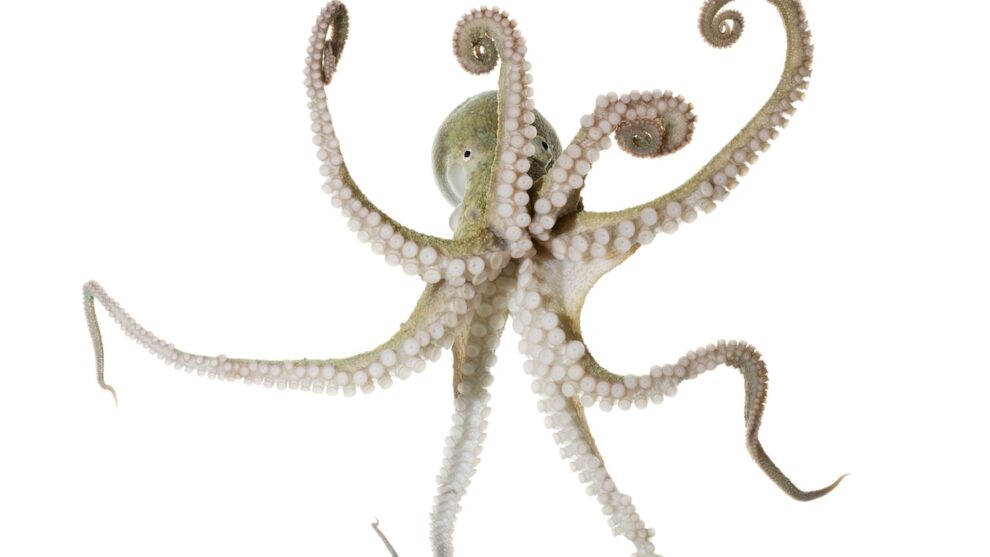
In the dim depths of the Pacific Ocean, a solitary creature faces a unique challenge: finding a mate in near-total darkness. The California two-spot octopus, known for its reclusive nature, has long puzzled scientists with its ability to locate partners. Now, researchers have uncovered a remarkable adaptation—the male octopus possesses a specialized ‘sex arm’ that can detect female hormones, enabling mating in the dark.
A Solitary Creature’s Secret
The California two-spot octopus is a solitary creature, spending most of its life alone on the ocean floor. How exactly they manage to find suitable mates has been one of the ocean’s best-kept secrets. Unlike many animals that rely on visual cues or vocalizations, octopuses inhabit environments where visibility is limited. This mystery prompted scientists to investigate the sensory mechanisms behind their mating behavior.
Now scientists have discovered that male octopuses have a unique way of sensing a female’s presence. The key lies in a specialized arm called the hectocotylus, which is used for transferring sperm during reproduction. This arm is not just a reproductive tool; it is also a sophisticated sensory organ.
The Hectocotylus: A Sensory Wonder
Scientists found that the male’s hectocotylus, the specialized arm for mating, is lined with receptors that can sense hormones from the female. These receptors are tuned to detect chemical signals released by females, allowing the male to locate a potential mate even in complete darkness. This discovery sheds light on how these intelligent cephalopods navigate their complex social interactions.
The hectocotylus is a modified arm that in many octopus species is used to deliver spermatophores to the female. In the California two-spot octopus, this arm has evolved to serve a dual purpose: both as a mating organ and as a sensor for female pheromones. The presence of these receptors suggests that chemical communication plays a crucial role in octopus reproduction.
Implications for Understanding Octopus Behavior
This finding provides a new perspective on the sensory world of octopuses. While they are known for their excellent vision and problem-solving abilities, the discovery of hormone-sensing receptors on the hectocotylus highlights the importance of chemical cues in their lives. It also explains how solitary individuals can successfully find mates in vast, dark oceans.
Understanding this mechanism could have broader implications for marine biology and conservation. Octopuses are highly sensitive to environmental changes, and knowledge of their reproductive strategies can help protect their habitats. The source did not provide details on the exact hormones involved or the range of detection, but the discovery opens avenues for future research.
A New Chapter in Cephalopod Research
The revelation that male octopuses have a ‘sex arm’ capable of sensing females in the dark adds a fascinating chapter to cephalopod research. It underscores the remarkable adaptations that have evolved in these creatures to overcome the challenges of their environment. As scientists continue to explore the depths, more secrets of octopus behavior are likely to emerge.
For now, the California two-spot octopus stands as a testament to nature’s ingenuity, using a specialized arm not only for reproduction but also as a beacon in the dark. This discovery not only answers a long-standing question but also highlights the complexity of life beneath the waves.
Frequently Asked Questions
How does a male octopus find a female to mate with in the dark?
The male octopus uses its specialized mating arm, the hectocotylus, which is lined with receptors that can sense hormones from the female, allowing it to locate a mate even in darkness.
What is the hectocotylus and what is its function in male octopuses?
The hectocotylus is a specialized arm in male octopuses used for mating. It is lined with receptors that can sense hormones from the female, enabling the male to find a mate in the dark.
What species of octopus was studied to discover the male’s ability to sense female hormones?
The study involved the California two-spot octopus, a solitary creature, where scientists found that the male’s hectocotylus has receptors to sense female hormones.